Call : (045) 809 0050
Email : tarlacmed@tarlacmedicalcenter.com.ph

Coronary Angiography Procedure in Tarlac
Understanding Coronary Angiography and Its Importance
Heart disease remains one of the leading causes of hospitalization and medical emergencies in the Philippines. Many patients experience chest pain, shortness of breath, fatigue, or discomfort without realizing these may already be signs of blocked arteries or coronary artery disease. One of the most important diagnostic procedures used to evaluate heart health is coronary angiography.
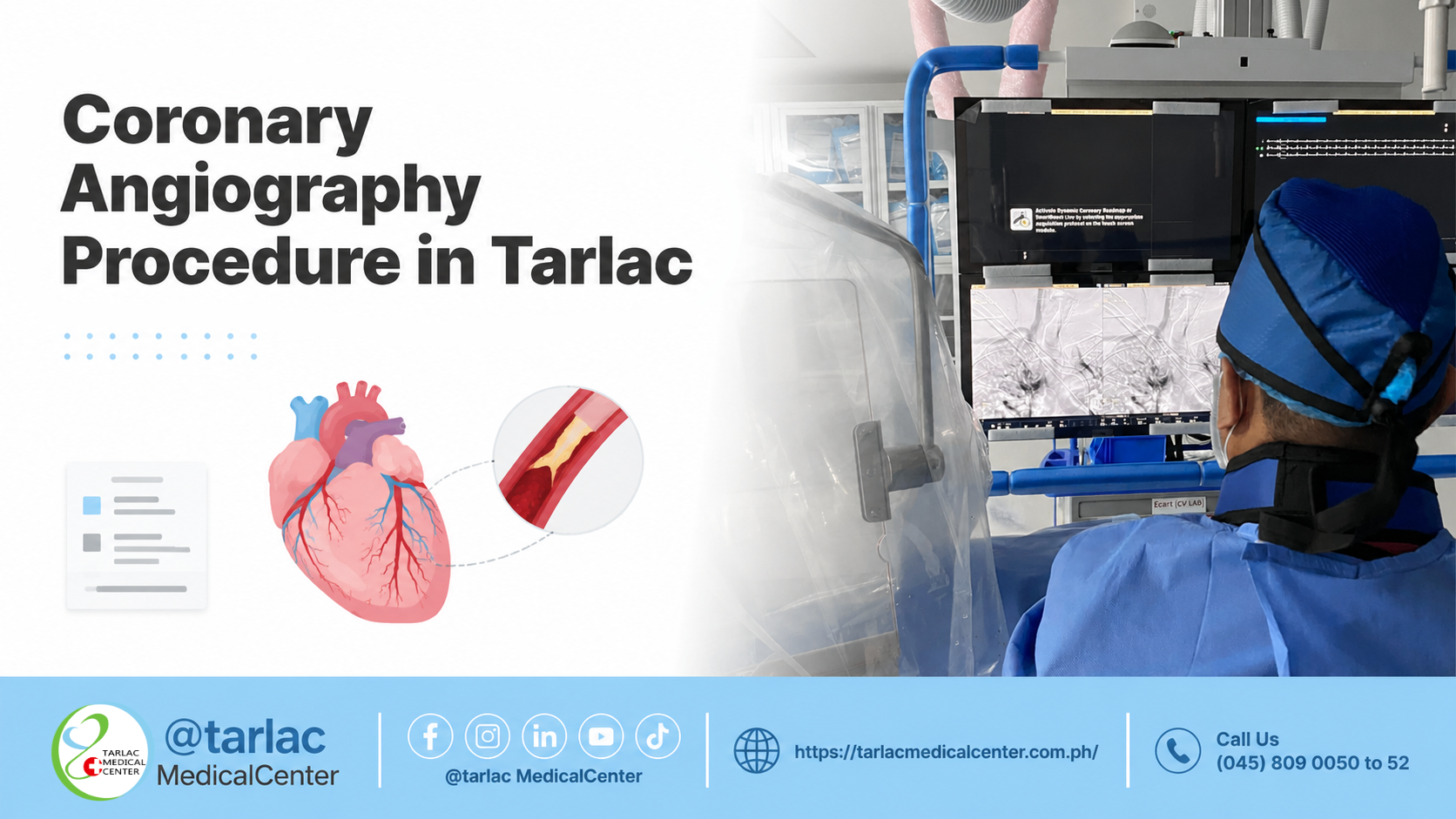
A coronary angiography procedure is performed inside a cathlab, where doctors use specialized imaging equipment to examine blood flow inside the coronary arteries. The cathlab allows cardiologists to identify blockages, narrowed arteries, and other cardiovascular conditions that may increase the risk of heart attack.
At Tarlac Medical Center, the cathlab plays an important role in diagnosing and treating heart conditions through minimally invasive cardiac procedures. Patients who experience recurring chest pain, uncontrolled hypertension, abnormal ECG findings, or suspected coronary artery disease may be advised to undergo coronary angiography.
What Is Coronary Angiography?
Coronary angiography is a minimally invasive diagnostic procedure that uses contrast dye and X-ray imaging to evaluate the blood vessels supplying the heart. The procedure is performed by inserting a thin catheter through a blood vessel in the wrist or groin and guiding it toward the coronary arteries.
Inside the cathlab, doctors inject contrast dye into the arteries while imaging equipment captures real-time images of blood flow. These images help determine whether there are narrowed or blocked arteries that could reduce blood supply to the heart.
The cathlab environment is specifically designed to support accurate cardiovascular imaging, emergency response, and interventional cardiac procedures when necessary.
Who May Need Coronary Angiography?
Doctors may recommend coronary angiography for patients experiencing symptoms or conditions associated with heart disease. Common reasons include:
- Persistent chest pain or angina
- Shortness of breath
- Suspected coronary artery disease
- Abnormal stress test results
- History of heart attack
- High cardiovascular risk factors
- Evaluation before heart surgery
The cathlab helps physicians determine the severity of artery blockage and whether additional treatment such as angioplasty or stent placement is needed.
What Happens During the Procedure?
Before the procedure, patients undergo evaluation and preparation. Vital signs are monitored, and the healthcare team explains the process and potential risks.
Inside the cathlab, local anesthesia is administered before the catheter is inserted into the blood vessel. Using advanced imaging guidance, the catheter is directed toward the coronary arteries. Contrast dye is then injected while images are captured.
The procedure typically takes around 30 minutes to one hour depending on the complexity of the case. Most patients remain awake during the procedure but are given medication to help them relax.
Because the cathlab uses minimally invasive techniques, recovery time is generally shorter compared to traditional surgical procedures.
Benefits of Coronary Angiography
Coronary angiography offers several important advantages in diagnosing cardiovascular disease:
- Early detection of blocked arteries
- Accurate evaluation of blood flow
- Identification of heart disease severity
- Guidance for treatment planning
- Faster diagnosis during emergencies
The cathlab allows cardiologists to quickly identify life-threatening conditions and perform emergency interventions if needed.
Recovery After Coronary Angiography
After the procedure, patients are monitored for several hours before discharge. Some patients may stay overnight depending on their condition.
Patients are usually advised to:
- Drink plenty of fluids
- Avoid strenuous activity temporarily
- Monitor the insertion site
- Follow prescribed medications
- Attend follow-up consultations
Recovery time varies, but many patients are able to resume normal activities within a few days.
Advanced Cardiac Care at Tarlac Medical Center
The Heart and Vascular Institute at Tarlac Medical Center provides comprehensive cardiovascular services supported by a modern cathlab facility. Through advanced imaging technology and experienced specialists, patients can receive timely diagnosis and treatment for heart disease.
The cathlab is designed to support both diagnostic and interventional procedures, helping improve patient outcomes while minimizing recovery time.
Frequently Asked Questions (FAQs)
What is the purpose of coronary angiography?
Coronary angiography helps doctors evaluate blood flow inside the coronary arteries and identify blockages or narrowing that may increase the risk of heart attack.
Is coronary angiography painful?
Most patients experience minimal discomfort during the procedure because local anesthesia and sedation are commonly used.
How long does recovery take after coronary angiography?
Many patients recover within a few days, although recovery may vary depending on the patient’s overall condition.
Is coronary angiography performed in a cathlab?
Yes. Coronary angiography is typically performed inside a specialized cathlab equipped for cardiac imaging and minimally invasive heart procedures.