Call : (045) 809 0050
Email : tarlacmed@tarlacmedicalcenter.com.ph

Lung Biopsy Procedure in Tarlac
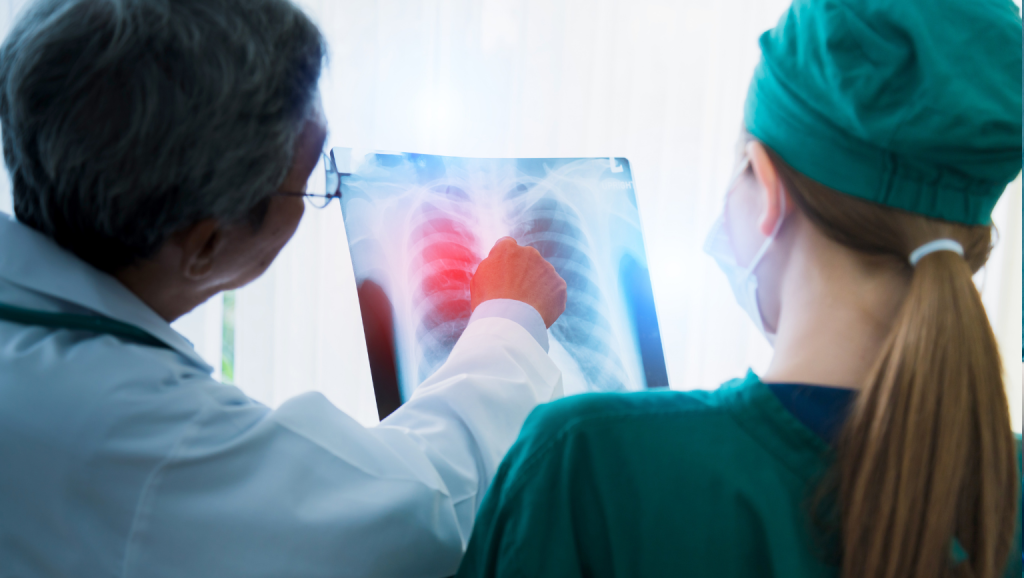
A lung biopsy is a diagnostic procedure performed to examine abnormal lung tissue, nodules, infections, or suspected tumors. By obtaining a small sample of lung tissue, physicians can accurately determine the cause of abnormalities seen on imaging studies. At Tarlac Medical Center, we provide safe, precise, and carefully monitored lung biopsy procedures supported by advanced imaging technology and comprehensive laboratory analysis.
Early and accurate diagnosis plays a critical role in creating an effective treatment plan. Whether evaluating a suspicious lung nodule, confirming an infection, or diagnosing inflammatory lung disease, a biopsy provides essential information that imaging tests alone cannot fully determine. Prompt diagnosis allows timely medical or surgical intervention and improves overall patient outcomes.
When Is a Lung Biopsy Needed?
Your physician may recommend a lung biopsy if you have:
- A lung nodule detected on chest X-ray or CT scan
- Persistent or unexplained lung infection
- Suspicion of lung cancer
- Interstitial lung disease
- Abnormal imaging findings requiring tissue confirmation
- Enlarged lymph nodes within the chest
In many cases, imaging tests such as chest X-rays, CT scans, or PET scans reveal abnormalities but cannot definitively identify whether the condition is cancerous, infectious, inflammatory, or benign. A biopsy provides diagnostic clarity, allowing physicians to determine the exact nature of the problem and recommend appropriate treatment without unnecessary delay.
Types of Lung Biopsy Procedures
The type of biopsy performed depends on the size, location, and accessibility of the abnormal tissue. At Tarlac Medical Center, our specialists carefully evaluate imaging findings to determine the safest and most effective approach.
Needle Biopsy (Percutaneous Biopsy)
This procedure is guided by CT scan or ultrasound imaging. A thin needle is inserted through the chest wall into the lung to collect a small tissue sample. It is commonly used for peripheral lung nodules and typically requires only local anesthesia with light sedation.
Bronchoscopic Biopsy
A flexible tube called a bronchoscope is passed through the mouth or nose into the airways. Small instruments are used to collect tissue samples from inside the lungs. This method is often recommended for abnormalities located near or within the airways.
Surgical Biopsy
For deeper, complex, or difficult-to-reach lesions, a surgical biopsy may be required. This may be performed through minimally invasive video-assisted thoracoscopic surgery (VATS) or, in rare cases, open surgery. Surgical biopsy allows for a larger tissue sample, which may improve diagnostic accuracy.
The choice of procedure is based on careful clinical assessment, imaging results, and the patient’s overall health condition.
Recovery and Monitoring
Recovery depends on the type of biopsy performed.
For needle or bronchoscopic biopsies:
- Patients are usually observed for a few hours after the procedure
- Mild discomfort at the biopsy site may occur
- Temporary coughing or minor blood-tinged sputum may be experienced
- Most patients return home the same day
For surgical biopsy:
- Hospital stay may range from 1 to 3 days
- Chest tubes may be temporarily placed to remove air or fluid
- Full recovery may take several weeks
Our medical team closely monitors patients for potential complications such as bleeding, infection, or pneumothorax (air leakage causing partial lung collapse). Post-procedure imaging is often performed to ensure lung stability before discharge.
Benefits of a Lung Biopsy
A lung biopsy provides:
- Accurate diagnosis of lung conditions
- Confirmation of cancer type and stage if present
- Guidance for targeted therapy or chemotherapy
- Identification of infectious organisms
- Differentiation between inflammatory and malignant diseases
Accurate tissue diagnosis ensures that patients receive the most appropriate and effective treatment.
Why Choose TMC for Lung Biopsy?
At Tarlac Medical Center, we are committed to safe and precise diagnostic care. Our facility offers:
- Advanced imaging technology for guided procedures
- Skilled pulmonologists and thoracic specialists
- Modern operating and procedure rooms
- Comprehensive pathology and laboratory services
- Careful postoperative monitoring and follow-up
We understand that undergoing a lung biopsy can be stressful. Our team prioritizes patient comfort, clear communication, and compassionate support throughout the entire diagnostic process. Accurate diagnosis is the foundation of effective treatment, and we are dedicated to delivering dependable results with patient safety as our highest priority.
Frequently Asked Questions About Lung Biopsy
Is a lung biopsy painful?
Most lung biopsies are performed under local anesthesia with sedation or general anesthesia for surgical procedures. Patients may feel mild discomfort afterward, but pain is usually manageable with medication.
How long does a lung biopsy take?
Needle and bronchoscopic biopsies typically take 30 to 60 minutes. Surgical biopsies may take longer depending on complexity.
What are the risks of a lung biopsy?
Potential risks include bleeding, infection, or pneumothorax (collapsed lung). These complications are uncommon and are carefully monitored by our medical team.
How soon will I receive the results?
Biopsy results are usually available within a few days, depending on laboratory analysis and whether additional specialized testing is required.
Can I go home the same day after a lung biopsy?
Most patients undergoing needle or bronchoscopic biopsy can go home the same day. Surgical biopsy patients may require a short hospital stay.
About Tarlac Medical Center

The TARLAC MEDICAL CENTER focuses on the hospital’s commitment to excellence and distinction in patient care.
Quick Links
Contact Information
Address: 8th St. TDMC Hospital Drive, Fairlane Subd, San Vicente, Tarlac City
Email: marketing.tarlacmed@gmail.com
Phone: (045) 809 0050